Children's football shoes adidas
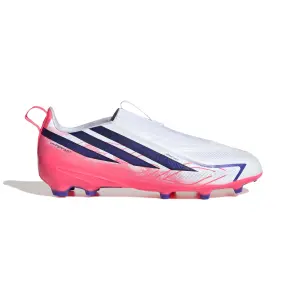
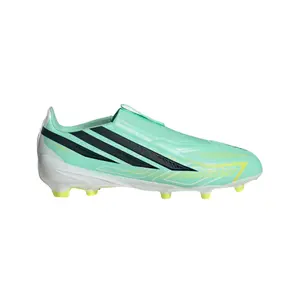
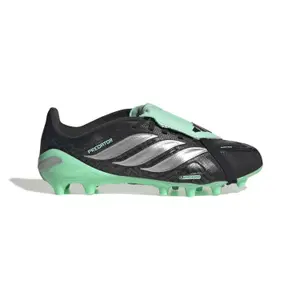
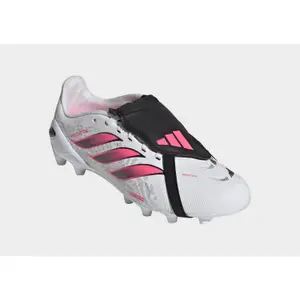
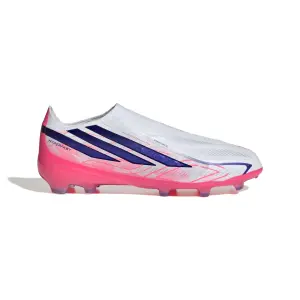
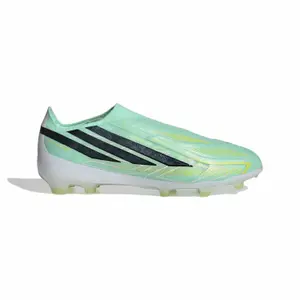
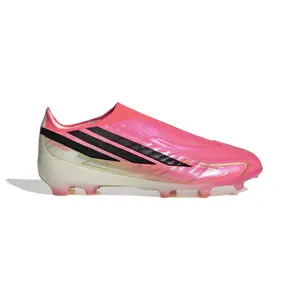
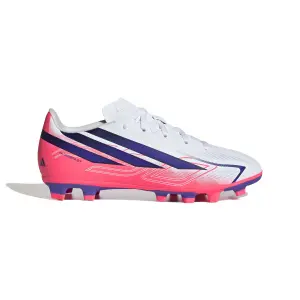
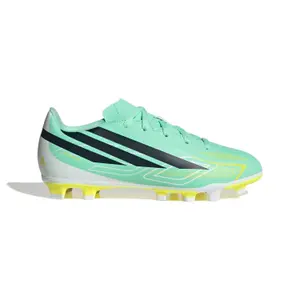
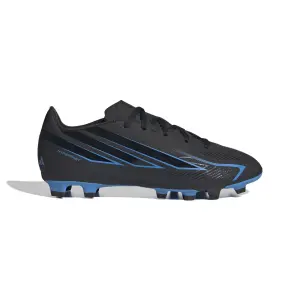
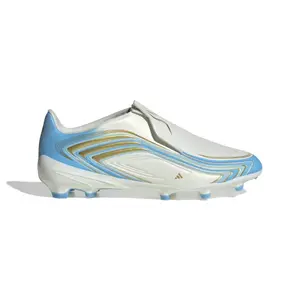
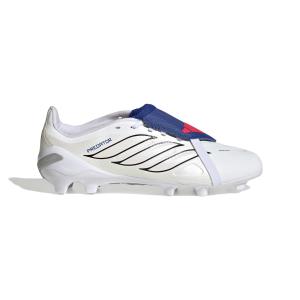
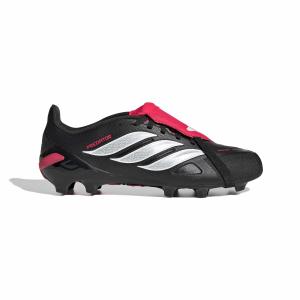

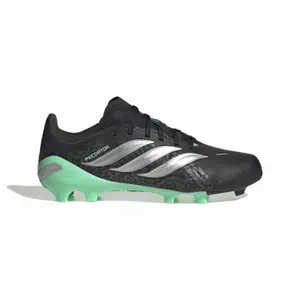

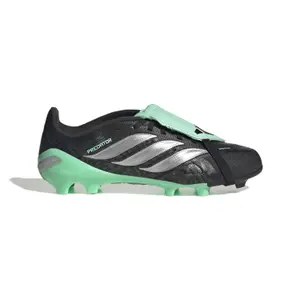
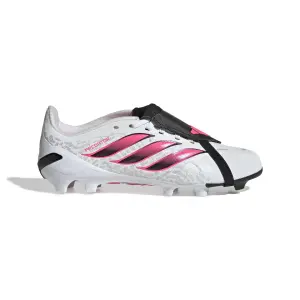
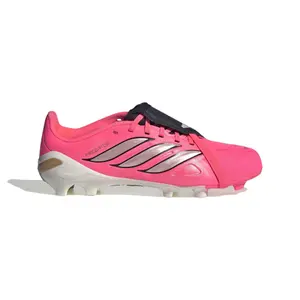
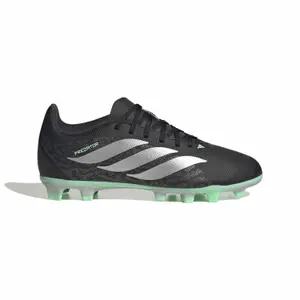

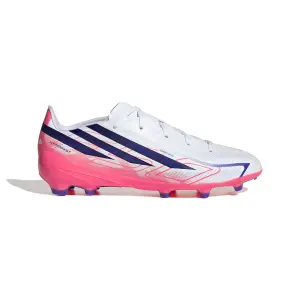
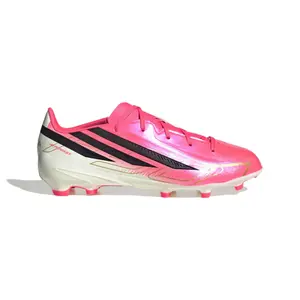
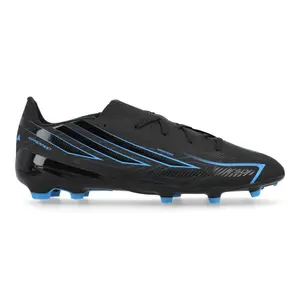
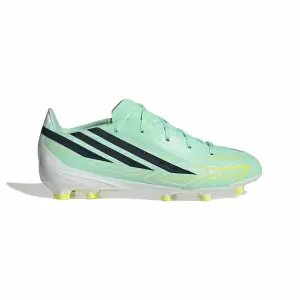
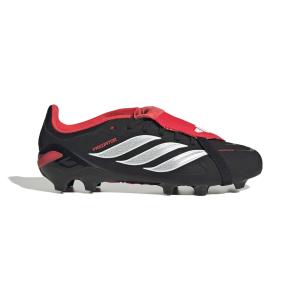

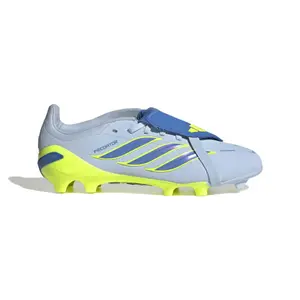

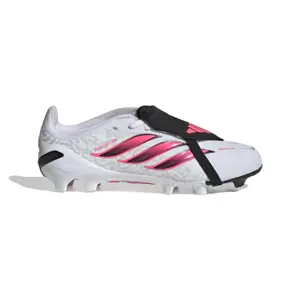
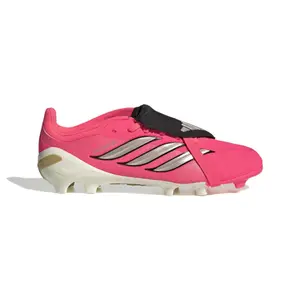
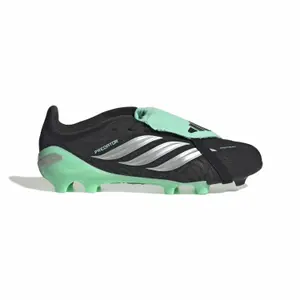


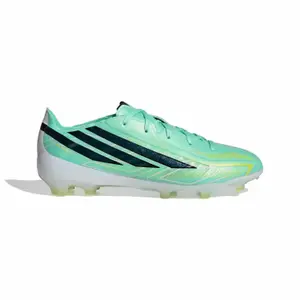


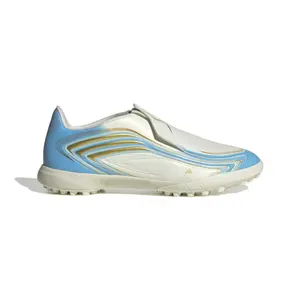


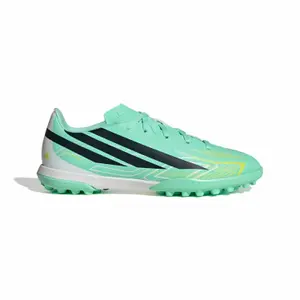
Here you will find football boots adidas for children, from the first pairs with studs to indoor models, in the F50, Predator and Copa lines. The selection covers junior sizes and various soles, depending on whether your child plays on grass, astro turf, artificial grass or in a gym.
To compare with other brands, you can return to the children's football boots by brand.
Which football boots adidas should you choose for a child?
Choosing a pair of adidas football boots for a child starts with the pitch they play on, then the shoe size and support, and only then the model. A child who trains on natural grass, another who spends winter on synthetic surfaces, and a third who plays in a gym don’t need the same sole, even if the upper looks similar. Then there's the question of the foot: a junior grows quickly, and a pair that’s too tight will result in blisters and slipping support.
The level of play also matters. For a beginner discovering football at school, a soft and easy-to-put-on pair is more than enough. For a registered player who juggles training and matches, the fit and durability of the upper become the real criteria.
F50, Predator, Copa: what do the big adidas lines offer in the kids' version?
adidas builds its football boots around three main lines, adapted for kids with simpler uppers and more accessible entry prices than the professional models. Each one corresponds to a way of playing rather than a skill level.
- The F50 is the lightest line, designed for players seeking speed and depth runs. It's often the choice of wingers and forwards.
- The Predator focuses on striking and control, recognizable by its textures on the front foot. It appeals to midfielders and anyone who loves to pass the ball far and hard.
- The Copa prioritises comfort and a soft touch, with flexible uppers that hug the foot from the very first sessions. It’s the most reassuring choice for a child with wide or sensitive feet.
In addition to these three lines, adidas offers models for indoor football and street use, featuring a flat rubber sole. Each line comes in several variations, from the simplest to the most elaborate, allowing you to stick with the same model from one season to the next while adapting your budget.
FG, MG, AG, TF or indoor: which adidas sole for which pitch?
The sole is chosen based on the surface your child plays on most often, as it provides grip and protects the joints. FG molded studs are designed for dry or slightly wet natural grass, the most common surface in clubs.
- The MG soles are mixed soles, useful when a child alternates between grass and synthetic pitches within the same week.
- The AG soles are designed for synthetic turf, with more numerous and shorter studs to better distribute weight.
- The TF soles, with small dots, are used on hard ground, stabilised surfaces, and very worn synthetic, typically for winter training.
- The indoor models, with flat rubber soles, are essential in gyms where studs are prohibited.
If the club plays on only one type of surface, one well-fitted pair is better than two versatile pairs. If training and matches happen on different surfaces, a mixed sole prevents the need to buy twice.
How to find the right shoe size in adidas football boots for kids?
The right size leaves about the width of a finger between the longest toe and the end of the shoe, with the foot wearing a match sock. Football boots fit closer to the foot than regular trainers, but the toe should never touch: that's the reflex to check while standing, under load, and not sitting.
Two common traps arise. Taking two sizes up to make the pair last disrupts the support and causes the foot to slip with every change of direction. And keeping a pair from the previous season just because it still fits quickly leads to damaged toenails. For younger ones, Velcro closures or laceless uppers make it easier to get dressed before training when the child is handling it alone in the changing room.
Kids' version or adult version: when should you switch sections?
The transition from the kids' section to the adult section depends on the shoe size, not the age. Junior ranges often stop around the larger sizes at the end of childhood, and a teenager who exceeds this limit finds the same model in the adult version, with stiffer uppers and soles.
In practical terms, if your child is at the end of the junior sizing range, check both sides before choosing: the kids' version often remains softer and more forgiving for a foot still growing, while the adult version provides more support for a player who has grown in size.
adidas, Nike, Puma or Joma: where to find other kids' brands?
Other brands of kids' football boots are listed on their own pages, allowing for easy comparison before making a decision:
- The kids' football boots Nike, to find the Mercurial, Phantom, and Tiempo lines in junior sizes.
- The kids' football boots Puma, often chosen for their soft uppers and vibrant colours.
- The kids' football boots Joma, a brand well-represented in clubs, appreciated for its price-quality ratio.
- The overview page of the kids' football boots by brand, handy when starting from the pitch and size rather than a specific brand.
If you’re looking for the latest models, the kids' new arrivals gather the latest references uploaded, including seasonal colours.
Where to find good deals on adidas kids' shoes?
Offers are gathered on dedicated pages you can check at any time instead of waiting for an announcement. The kids' deals and the kids' sales filter directly on junior sizes, while the deals, clearance, and special offers pages cover the entire catalogue, including adults.
The calendar helps you aim accurately. The Black Friday kicks off the commercial period, followed by the end of year holidays, then the winter sales and the French Days in spring. Between these key moments, end-of-season and collection changes see last year's colours drop into clearance, making it the best time to equip a child playing on just one type of pitch.
Two other pages are handy when the need is urgent or anticipated: the products dispatched within 24 hours for a quickly needed pair before a match, and the new arrivals for tracking the releases for the 2026/27 season.
Frequently asked questions
Can you wear FG studs on synthetic grass?
It's possible occasionally, but it's not the intended use: FG studs do not penetrate well into synthetic surfaces and wear out faster on a hard surface. For a child who regularly plays on synthetic, an AG sole or a mixed MG sole is more suitable. Some clubs even ban long studs on their new synthetic pitches.
Do you need to buy two pairs, one for training and one for matches?
It's not necessary for a child unless training and matches take place on different surfaces, for instance stabilised during the week and grass on the weekend. In that case, a TF pair and an FG pair cover both situations without forcing an unsuitable sole. Otherwise, one well-chosen pair dried correctly after each session is enough for a season.
Do adidas kids' shoes fit like regular trainers?
They fit more snugly than city shoes, as the foot shouldn't move within the upper during changes in support. The reference size is a good starting point, but it's important to check the length with the match sock on, while standing and under load. Models with soft uppers, like the Copa line, are generally more accommodating for wider feet.
How long does a pair of football boots last for a child?
In practice, it's almost always growth that ends the life of the pair before wear, especially between the ages of six and twelve. The point to watch is the front of the foot: as soon as the toe reaches the end, it’s time to change, even if the sole is intact. A pair rinsed with clear water and dried in the open air, away from a radiator, keeps its flexibility longer.
Should you get the same model that professional players wear?
That’s not a useful criterion for a child, as the junior versions of the same line are designed for a growing foot and club practice, not for the highest level. An entry-level model in the F50, Predator, or Copa line provides the same spirit of play with more flexibility and comfort. What matters most is having a sole suited to the pitch and the right size.