Leather football boots Mizuno Morelia
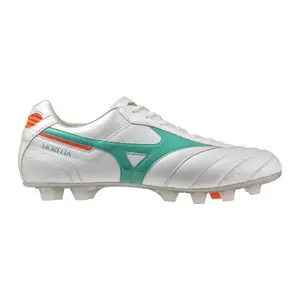


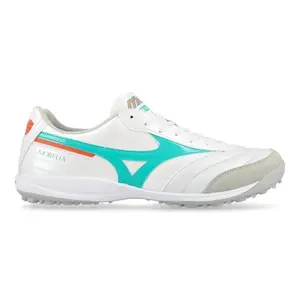

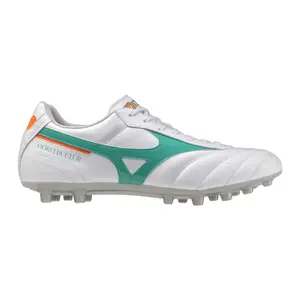


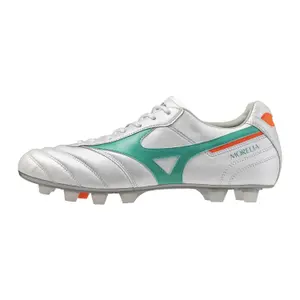
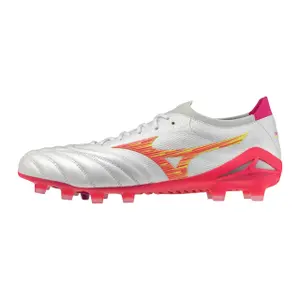


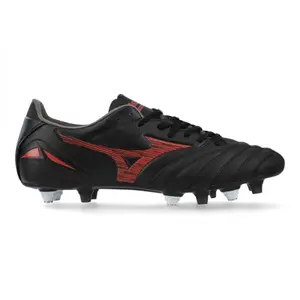
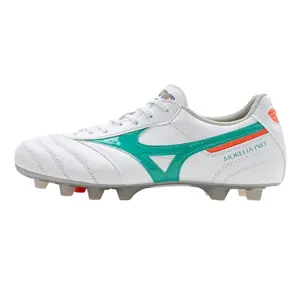

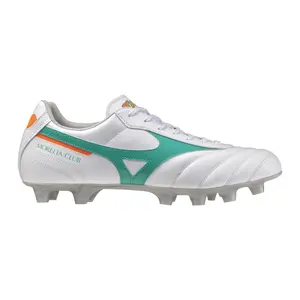

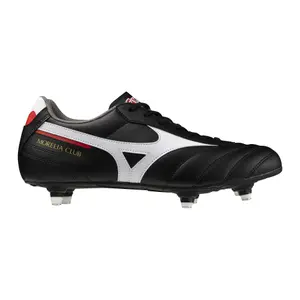
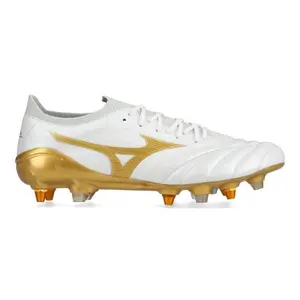
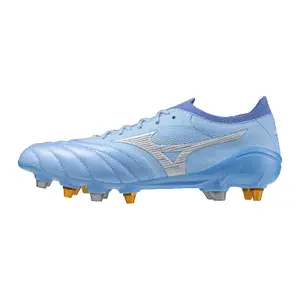


The football boots Mizuno Morelia bring together the leather models from the Japanese brand, designed for touch and comfort from the first wear. Here you can find the classic silhouette of the Morelia II and the lighter version Morelia Neo IV, with soles suited for natural grass, synthetic surfaces, stabilised pitches, and futsal.
Each product page details the colour, available sizes, and type of sole, so you can compare the Morelia models before ordering.
What characterises the football boots Mizuno Morelia?
The Morelia is Mizuno's line of leather football boots, built around a soft sock and a very direct touch on the ball. It's the oldest range of the Japanese brand and it remains its signature: a slim upper, central lacing, and a design that allows the foot to move freely. Players who choose them generally look for immediate comfort, without a long break-in period, and precise sensations both during passing and ball control.
In this selection, you'll find two families: the Morelia II, the historic silhouette with generous leather, and the Morelia Neo IV, the lighter version of the same line. Both share the same philosophy but cater to different types of players and slightly different playing surfaces.
Morelia II or Morelia Neo IV: which one to choose?
The Morelia II prioritises comfort and foot stability, while the Morelia Neo IV prioritises lightness and agility. If you play more in midfield or defence, if you have frequent matches and training, and if you want a boot that offers a bit more foot protection, the Morelia II is the most versatile of the two: its thicker upper absorbs contact better and the interior volume suits normal to wide feet.
If your game relies on short touches, quick direction changes, and repeated sprints, the Morelia Neo IV is the way to go. It maintains the leather and touch of the line, but in a finer and lighter construction, with a Beta version that has reworked lacing and upper. One useful point before ordering: both families often fit quite snugly in length, so compare your measurements with the size guide on the product page rather than relying on your usual size from another brand. If you only want to see the lighter models, the Morelia Neo selection lists them separately.
Elite, Pro, Japan: what do the finishes of the Morelia range mean?
These labels correspond to different levels of finish, from the most refined competition model to the more accessible one. They appear in the product name and help you position a pair before even looking at the sole:
- The Japan versions are the highest-end of the line, associated with the brand's Japanese craftsmanship and leather selected for its softness.
- The Elite versions position themselves in the competition segment, with a lighter construction and fine leather, for players who want maximum sensations.
- The Pro versions take the silhouette of the line with a slightly more robust construction, providing a good compromise between touch on the ball and repeated training use.
- The Club versions are the simplest of the line, aimed at the player who wants the Morelia shape for regular use without seeking extreme performance.
The level of finish does not replace the choice of sole: the same pair often exists in several configurations of studs, and it's this last point that determines if it is suitable for your surface.
Which Morelia sole for which surface?
The abbreviation at the end of the name indicates the intended surface, and this is the first criterion to consider. Here's how to read the configurations present in the Morelia range:
- FG: moulded studs for dry to normal natural grass, the default choice if you play on grass.
- FG/AG and Mix: versatile soles, designed to alternate between natural grass and synthetic grass without changing boots.
- AG: sole specifically for synthetic surfaces, with more numerous and better-distributed studs to reduce strain on the joints.
- MD: moulded studs for general use on natural surfaces, suitable for both training and matches.
- TF: sole with short studs for short synthetic surfaces and stabilised grounds, very commonly used for winter training sessions.
- Futsal: flat rubber sole for courts and indoor surfaces, present in the range with the Morelia Pro for futsal.
Practically, a player who trains on synthetic and plays their matches on grass should look for a versatile sole, or keep a pair of TF for training and a pair of FG for match days.
How to maintain leather football boots?
The leather of a Morelia is best preserved by cleaning it after each match and allowing it to dry without heat source. Remove dirt when dry with a soft brush, wipe the upper with a damp cloth, and then let the pair dry at room temperature away from a radiator, which can harden and crack the leather. Stuffing newspaper inside helps the boot maintain its shape and dry faster.
Regularly conditioned leather stays supple longer and keeps the touch on the ball that makes this range appealing. This also explains why a well-maintained Morelia deforms less than an equivalent synthetic upper over the season.
Morelia, Alpha, Rebula: the other lines of Mizuno football boots
The brand offers its football boots in several ranges, which you can consult separately if the Morelia doesn't exactly match what you're looking for:
- The Morelia Neo, the lighter version of the Morelia, to consider if you want the leather of the range in a finer construction.
- The Alpha, the speed-oriented line of the brand, designed for players who rely on running and acceleration.
- The Monarcida Neo, the most accessible line in the Mizuno catalog, useful for a first purchase or a second training pair.
- The Sala, the range dedicated to futsal and indoor play, featuring non-marking soles.
To compare all the lines side by side, the Mizuno page brings together all the boots the brand has available on the site.
Where to find a Morelia at a good price on Foot-Store?
The discounted Morelia models can be found on the commercial pages of the site, which are continuously updated. The best approach is to check these pages before ordering at full price, especially at the end of the season and when a new version of the range arrives, when last year's colours shift to the promotions.
- The promotions on football boots and the shoe deals page for current discounts throughout the year.
- The clearance shoes, which gathers end-of-line items and remaining sizes from past collections.
- The shoe sales during official sale periods.
- The new football boot releases to see the latest colours of the range.
- The boots shipped within 24 hours if you need your pair quickly for a match.
Regarding timing, the Black Friday for football boots kicks off the good deal season, followed by the year-end holidays, then the winter sales and the French Days in spring. Between these key events, the special offers remain the go-to point for tracking price drops.
Frequently asked questions about Mizuno Morelia boots
Is the Morelia suitable for wide feet?
The Morelia is often recommended by players with wide feet because the upper leather stretches slightly and moulds to the foot over time. The Morelia II, with the most generous construction in the range, is the most accommodating in volume. However, the length fits rather snugly, so check the size guide on the product page before ordering.
Do you need to break in a pair of Morelia before playing?
The leather of a Morelia requires much less break-in time than a standard leather boot, but a few sessions are enough for the upper to settle in. It's ideal to wear them in training before a match, rather than using them for the first time in competition. The seams and heel are the areas to monitor during the initial outings.
Can you play on synthetic surfaces with an FG sole?
An FG sole is designed for natural grass, and repeated use on synthetic can wear out the studs faster. For a synthetic surface, an AG sole or a versatile sole of the FG/AG or Mix type is more appropriate, and a TF sole is suitable for very short synthetic surfaces and stabilised grounds. The type of sole is indicated at the end of each model's name.
Are there Morelia available for kids?
This selection covers adult models and those offered in both adult and junior sizes, depending on availability for each reference. Size details are shown on the product page, which is the only reliable place to check if a colour is available in children's sizes. For a young player, the brand's more accessible lines are also worth considering.
What is the price difference between a Morelia Elite and a Morelia Pro?
The Elite and Japan versions are at the high end of the range and are thus more expensive than the Pro and Club versions, which are aimed at more everyday use. If budget is the main consideration, the site's promo and clearance pages often allow you to find a higher-end model in a previous collection colour. Exact prices are listed on each product page.